How to Remove Seamless Gutters: What to Know Before Starting
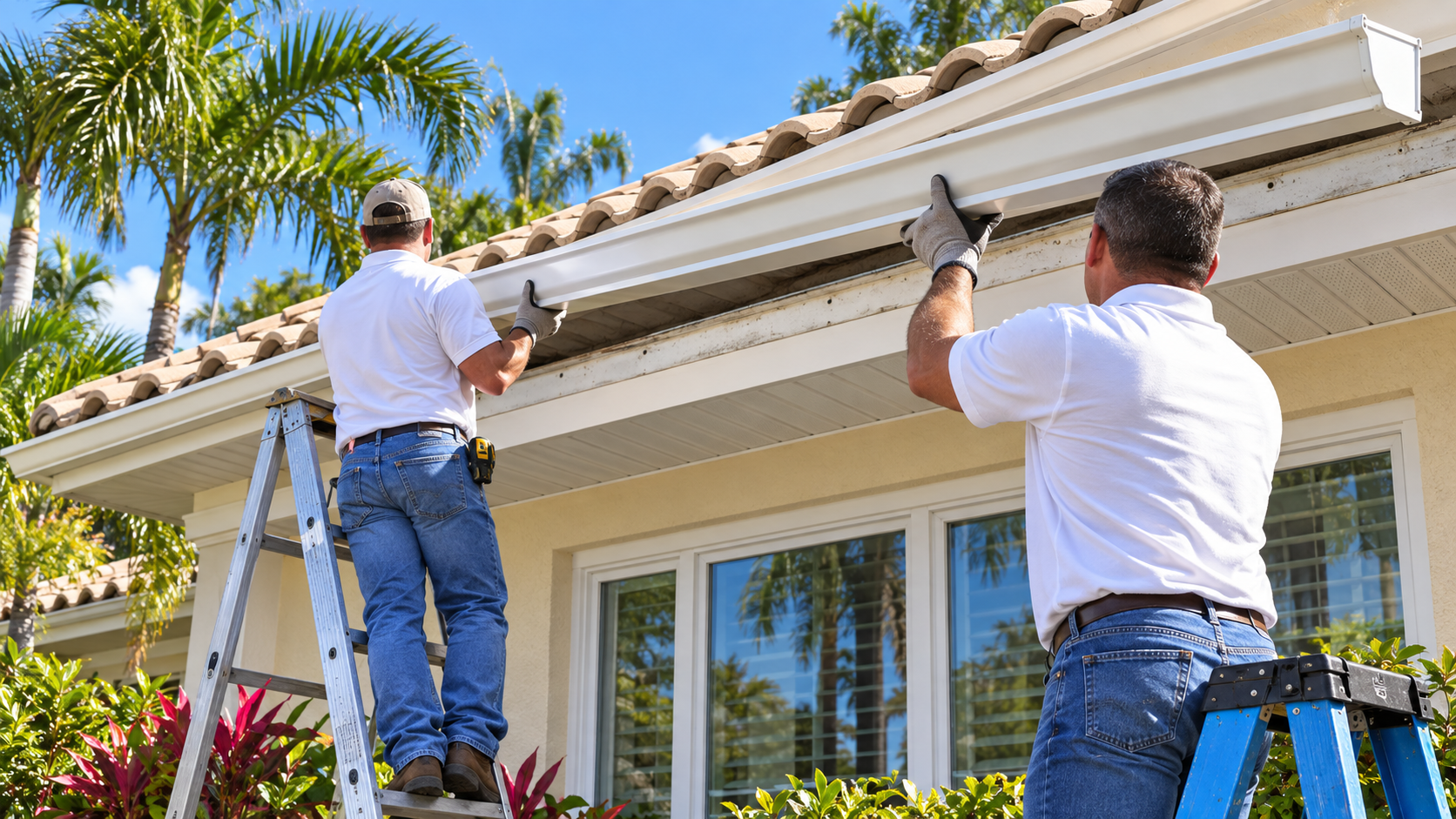
Removing seamless gutters involves identifying how the system is attached, disconnecting downspout connections, and releasing the mounting hardware while keeping the gutter run supported. The removal method depends on the hangers, fasteners, gutter condition, and surrounding roofline. Long gutter runs can bend or fall when their supports are released, so controlled handling and suitable access are essential.
If you are replacing damaged seamless gutters in Florida, removal also provides an opportunity to assess the fascia behind them. Loose attachments, deteriorated wood, and damage near the roof’s edge may need attention before a replacement system is installed. This guide explains what to check before removal, how attachment types affect the process, and when professional help is appropriate.
What Should You Check Before Removing Seamless Gutters?
Before removing seamless gutters, check how they attach to the home, whether the fascia shows visible damage, and how the gutter run will be supported during removal. These checks help you plan the work and identify problems that could affect the replacement installation.
Start with a ground-level inspection of the roofline. Sagging sections, loose fasteners, and gaps behind the gutter deserve attention, although the full condition of the fascia may only become visible after removal.
Pre-Removal Inspection Checklist
- Identify the mounting hardware. Hidden hangers, spikes and ferrules, or brackets require different removal methods.
- Look for visible fascia damage. Peeling paint, staining, or loose fascia covering can indicate areas that need closer inspection before new gutters are attached.
- Check downspout connections. Identify outlets, elbows, straps, and connections to drainage pipes that may need to be disconnected.
- Inspect the roof-edge relationship. Look for places where the gutter interacts with flashing or drip edge so removal does not disturb those components.
- Plan support for the entire run. A long gutter section needs controlled support as its fasteners are released. Do not rely on the remaining attachments to hold it securely.
- Decide whether the gutters will be reused. Tell your installer before removal, since bending or cutting a section can make reuse impractical.
If the inspection reveals deteriorated fascia or loose soffit panels, arrange an assessment before installing replacement gutters. Heights Aluminum’s soffit and fascia installation services provide a relevant starting point for discussing those roofline concerns.
Once you understand the condition of the system, the next step is to identify its attachment type and how that affects removal.
How Are Seamless Gutters Attached to a House?
Seamless gutters are commonly attached with hidden hangers, spikes and ferrules, or other bracket systems. Identifying the attachment type helps determine how to release the gutter without unnecessarily damaging the fascia or bending the gutter itself.
“Seamless” describes the continuous gutter run, not its mounting method. Before removal begins, check the hardware along the entire run because previous repairs may have introduced different fasteners.
Common Gutter Attachment Types
- Hidden hangers: These sit inside the gutter and commonly use screws to secure the system to the fascia or supporting structure. The gutter must remain supported as the screws and hangers are released.
- Spikes and ferrules: Long spikes pass through the gutter and a supporting sleeve called a ferrule. Pulling these fasteners can place stress on the gutter and fascia, especially when they are corroded or firmly embedded.
- Exposed brackets or straps: Some systems use external supports or straps connected near the roof edge. Their removal requires checking where they attach and whether roof materials or flashing overlap them.
If the mounting hardware is concealed, heavily corroded, or attached beneath roofing materials, have a gutter professional assess it before removal. Identifying these connections first helps protect the fascia and surrounding roof components.
With the attachment method identified, the next step is to prepare the work area and gather the equipment needed to support and remove the gutter safely.
What Tools and Preparation Are Needed to Remove Seamless Gutters?
The equipment needed to remove seamless gutters depends on the fasteners, the height of the roofline, and the length of each gutter run. Common items include compatible hand tools, protective gloves, eye protection, and suitable access equipment.
Before loosening any hardware, plan how the gutter will be supported and lowered. Long sections can twist or become difficult to control, so having someone nearby does not replace a proper handling plan.
Prepare the Equipment and Work Area
- Match tools to the hardware. Check screw heads, brackets, and downspout fasteners before selecting drivers or other removal tools.
- Wear gloves and eye protection. Metal edges, loose debris, and deteriorated fasteners can cause injuries during handling.
- Arrange suitable access. Use equipment appropriate for the height and task. Avoid overreaching or positioning a ladder against the gutter being removed.
- Clear the area below. Move vehicles, outdoor furniture, and other obstacles away from the work zone. Keep children and pets clear.
- Plan where removed sections will go. Choose a clear landing and storage area where sharp edges will not create a hazard.
- Check weather conditions. Postpone removal during rain, lightning, strong winds, or other conditions that make access and handling unsafe.
For upper-story gutters, restricted access, or runs that cannot be supported securely, arrange professional removal. If replacement is the goal, you can request a gutter replacement quote and discuss removal as part of the project.
Once the equipment and work area are ready, the next step is to disconnect the downspouts and any connected drainage components.
How Do You Disconnect Downspouts Before Removing Gutters?
Disconnecting a downspout involves releasing its connection to the gutter outlet and removing the straps or brackets that secure it to the wall. Support the downspout before releasing these attachments so it cannot drop, swing, or pull against the gutter.
Check the full drainage path first, including elbows, extensions, and connections to underground pipes. Connection methods vary, so identify screws, rivets, or sealed joints before attempting to separate any components.
What to Check When Disconnecting Downspouts
- Support each section. Keep the downspout and elbows controlled as their connections are released.
- Locate the outlet connection. Identify where the upper elbow or downspout attaches to the gutter outlet. Remove the connecting hardware without prying against the gutter.
- Release wall straps carefully. Remove the necessary fasteners while protecting the siding, stucco, or other wall finish.
- Separate lower drainage connections. Check for adapters or fasteners before disconnecting extensions or underground drainage connections.
- Avoid forcing stuck joints. Corrosion, sealant, or concealed fasteners may prevent separation. Reassess the connection rather than twisting or pulling harder.
- Label parts intended for reuse. Mark the position of elbows and sections, and keep their hardware together for inspection.
If a connection will not separate without damaging the outlet, downspout, or wall, have the installer determine whether it should be dismantled or replaced. Set removed components away from walkways, where their edges will not create a hazard.
With the downspouts disconnected, the next step is to release the gutter mounting hardware while keeping the entire run supported.
How Do You Release and Remove a Seamless Gutter Run?
A seamless gutter run is removed by supporting its length, releasing its mounting hardware, and lowering it in a controlled manner. The exact sequence depends on the attachment system, corners, and any connections to roof-edge components.
Do not assume the remaining fasteners will safely hold the gutter as others are removed. As support points are released, the section can shift, twist, or pull away from the fascia.
Key Steps for Controlled Gutter Removal
- Support the run before releasing fasteners. Arrange suitable access and enough support to control the section throughout removal.
- Check corners and adjoining sections. Connected gutter runs may need to be separated before either section can be lowered independently.
- Release the identified mounting hardware. Use tools suited to the screws, spikes, or brackets. Avoid using the fascia or roof edge as a prying surface.
- Watch for overlooked connections. If the gutter resists movement, stop and check for remaining fasteners, sealant, or overlapping flashing.
- Protect the gutter’s shape if reusing it. Avoid bending, twisting, or dragging the section during handling.
- Lower the section under control. Keep the area below clear and place the removed gutter in the prepared storage area.
Long runs and connected corners can be difficult to handle from ladders. If a section cannot be supported and lowered securely, have a professional complete the removal as part of your seamless gutter replacement project.
Once the gutter is down, the exposed fascia and roof edge should be inspected before a replacement system is installed.
What Should You Inspect After Removing Seamless Gutters?
After removing seamless gutters, inspect the exposed fascia, former attachment points, and roof edge for damage that could affect the replacement installation. Pay particular attention to deteriorated wood, enlarged fastener holes, and signs that water has been reaching behind the gutter.
Removal can reveal problems that were hidden by the old system. Aluminum fascia covering may conceal damaged wood beneath it, so an intact exterior surface does not always confirm that the underlying support is sound.
Areas to Check Before Installing New Gutters
- Fascia condition: Look for cracks, visible decay, loose boards, or areas that need a closer professional assessment.
- Former fastener locations: Check for enlarged holes, splitting, and damaged attachment points. The installer should determine suitable locations for replacement fasteners.
- Water staining: Investigate staining or peeling finishes to identify the source of moisture before covering the area again.
- Drip edge and flashing: Check for bent, loose, or disturbed components that may need correction to direct roof runoff into the new gutter.
- Soffit panels: Look for loose panels or visible damage near the former gutter line, while keeping ventilation openings unobstructed.
- Remaining hardware and debris: Identify protruding fasteners and loose material that need removal before repairs or installation.
If the inspection reveals roofline damage, discuss the necessary repairs before scheduling new gutters. Heights Aluminum’s soffit and fascia services provide an opportunity to address related exterior components as part of the project.
Once the roofline has been assessed, the next question is whether the removed gutters can be reused or should be replaced.
Can You Reuse Seamless Gutters After Removing Them?
Seamless gutters may be reusable if they remain structurally sound, retain their shape, and fit the intended installation. Removal alone does not mean they need replacement, but bends, tears, damaged outlets, or distorted edges can make reinstalling them impractical.
Before deciding, have the removed sections assessed along with the roofline and mounting requirements. Reusing a gutter also requires suitable hangers, secure attachment points, and a layout that directs water toward the downspouts.
When Reuse or Replacement Makes Sense
- Consider reuse when the run remains intact. A section removed temporarily for fascia repairs may be a candidate if it can be reinstalled without compromising its fit or function.
- Inspect holes and connections. Old attachment holes, corner joints, outlets, and end caps need evaluation before reinstallation.
- Replace significantly damaged sections. Torn metal, crushed profiles, or persistent deformation can prevent a dependable installation.
- Check whether the layout still works. Changes to the roofline, gutter length, or downspout locations may require a new custom-fit run.
- Compare the complete project cost. Include removal, handling, repairs, replacement hardware, and reinstallation when comparing reuse with a new system.
If the existing gutters are damaged or no longer suit the home, seamless gutters in Florida can be custom-fitted to the replacement layout. Ask your installer to explain whether reuse is practical before making that decision.
Next, we’ll cover common gutter removal mistakes and how to avoid damage to the surrounding roofline.
What Mistakes Should You Avoid When Removing Seamless Gutters?
Common gutter removal mistakes include releasing fasteners without supporting the run, forcing connections apart, and overlooking attachments near the roof edge. These errors can damage the gutter, fascia, flashing, or nearby wall finishes.
A gutter that appears loose may still be connected at a corner, outlet, or concealed bracket. If a section resists movement, stop and identify what is holding it before applying more force.
Common Gutter Removal Mistakes
- Letting the gutter hang from its last fasteners. Keep the section supported throughout removal to prevent an uncontrolled drop or damage to attachment points.
- Prying against fascia or flashing. Identify and release the connection rather than using surrounding materials for leverage.
- Pulling on connected downspouts. Disconnect their hardware and supports before moving the gutter run.
- Cutting before planning the project. Cutting prevents reuse of an intact run and creates additional sharp edges. Discuss any necessary cuts with the installer.
- Overreaching from a ladder. Reposition suitable access equipment instead of stretching sideways to reach another fastener.
- Installing replacement gutters over unresolved damage. Have deteriorated fascia and disturbed roof-edge components assessed before attaching the new system.
If removal exposes damaged exterior components, discuss repairs through Heights Aluminum’s soffit and fascia services before proceeding with replacement gutters.
Understanding these mistakes also helps you recognize when removal needs professional handling. Next, we’ll explain when to hire a gutter contractor.
When Should You Hire a Professional to Remove Seamless Gutters?
Hire a professional when the gutters are difficult to access, cannot be securely supported, or have connections that could disturb roofing materials. Upper-story installations, long continuous runs, and visibly damaged fascia are reasons to arrange an assessment before removal.
If you are replacing the system, ask whether removal and disposal are included in the installation quote. Coordinating the work also gives the installer an opportunity to assess the exposed roofline before attaching new gutters.
Situations That Call for Professional Removal
- Upper-story or restricted access: Sloped ground, landscaping, nearby structures, or other obstacles can complicate equipment placement.
- Long runs or connected corners: These sections require enough support to prevent twisting, swinging, or falling as attachments are released.
- Deteriorated fascia: Damaged backing may require repairs before it can support replacement gutters.
- Concealed or corroded hardware: Stuck fasteners and unclear connections can make removal more involved.
- Attachments beneath roof materials: Straps or brackets may require work around roofing or flashing.
- Plans to reuse the gutters: Controlled removal and handling help preserve sections for assessment and possible reinstallation.
When comparing proposals, ask who handles disposal, how unexpected fascia damage is addressed, and whether downspout reconnection is included. You can request a gutter removal and replacement quote from Heights Aluminum to discuss your home’s existing system and the scope of the project.
Next, we’ll answer common questions about removing seamless gutters, including whether the entire run needs to come down and how long removal may take.
Frequently Asked Questions About Removing Seamless Gutters
The scope of gutter removal depends on the attachment system, access, condition, and reason for the work. These answers can help you discuss removal and replacement with your installer.
Do You Have to Remove the Entire Seamless Gutter Run?
Not always. An installer may be able to release or remove only the portion needed for a repair, depending on the connections and access. However, a seamless run is one continuous piece, so cutting out a section creates a break that requires a planned repair or replacement.
Can You Remove Seamless Gutters Without Damaging Them?
It may be possible if the gutter is in good condition and remains supported while its attachments are released. Corrosion, stuck hardware, and existing deformation can complicate removal, so reuse cannot be guaranteed.
How Long Does Seamless Gutter Removal Take?
There is no single timeframe that applies to every home. The total length, building height, mounting hardware, corners, downspouts, and access all affect the work. Ask your contractor for an estimate based on the actual installation.
Do Gutters Need to Come Down for Fascia Repairs?
They may need to be temporarily removed or released to provide access to the damaged fascia and its attachment points. The repair scope determines how much of the gutter system needs to move.
Can You Leave Gutters Off While Waiting for Replacement?
Coordinate removal and replacement to limit the time your home is without its drainage system. Rainwater will discharge directly from the roof edge while gutters are absent, so discuss timing and temporary runoff management with your contractor.
Does Gutter Replacement Include Removal and Disposal?
That depends on the proposal. Confirm whether the price includes existing gutter removal, disposal, downspouts, and any necessary roofline repairs before approving the work.
With these questions answered, the final step is to plan removal, repairs, and replacement as one coordinated project.
Plan Your Seamless Gutter Removal and Replacement With Heights Aluminum
Removing seamless gutters starts with understanding their attachments, supporting each run, and protecting the surrounding roofline. Inspecting the exposed fascia afterward helps identify repairs that should be completed before replacement gutters are installed.
Whether you are replacing damaged gutters or removing them for exterior repairs, coordinate the project before work begins. Heights Aluminum can discuss your options for seamless gutters in Florida and related soffit and fascia work.
Request a Quote for Your Gutter Project
Contact Heights Aluminum to discuss your existing gutters, removal needs, and replacement plans. Ask what the proposal includes, from removal and disposal to downspout installation and any necessary fascia repairs, so you have a clear scope before the project starts.
About The Heights Aluminum
The Heights Aluminum is a licensed and insured Florida contractor based in Nokomis, specializing in exterior aluminum installations. Our services include seamless gutters in Florida, soffit and fascia installation, lanais and screened enclosures, and front entryways. We help homeowners improve their properties with functional, coordinated exterior solutions.
Planning an installation or replacement project? Call (941) 492-6064 or request a quote to discuss your home’s needs.